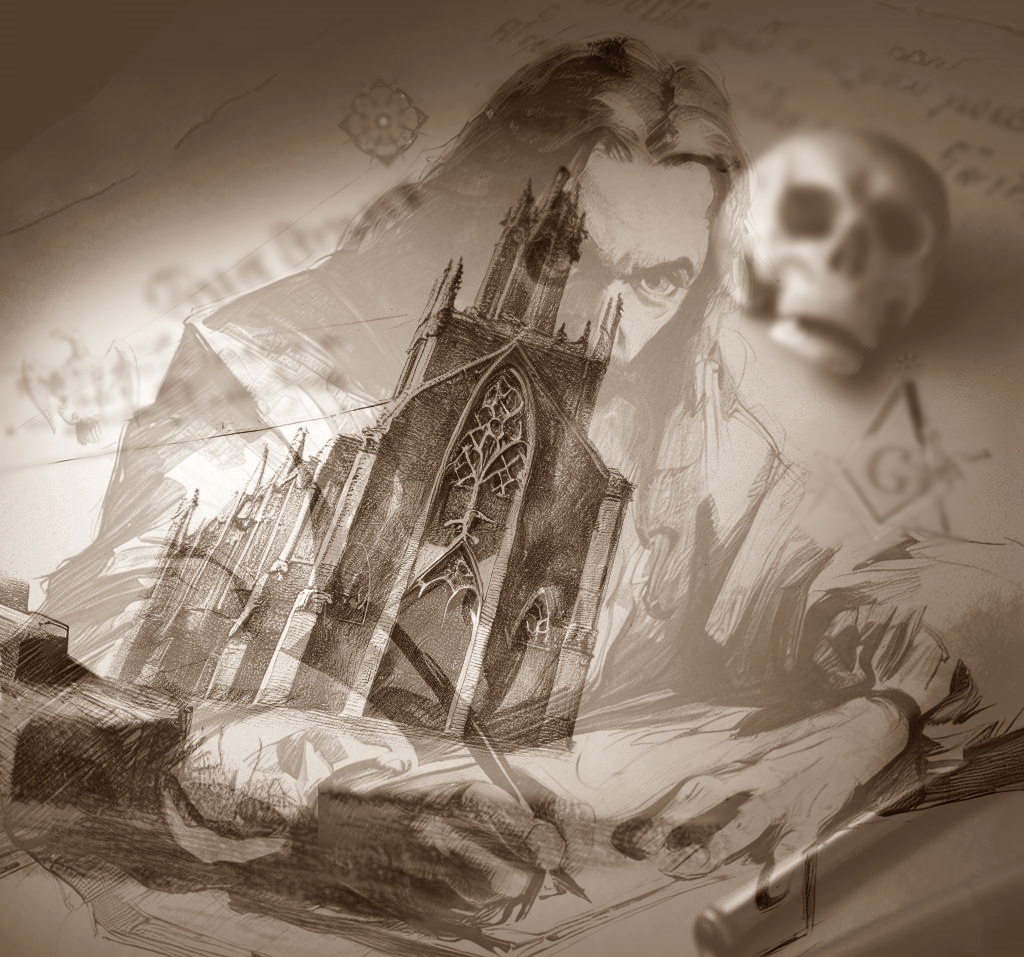
Exploring the legends of Victorio Peak led me down a fascinating rabbit hole, uncovering tales of buried treasures and hidden vaults. One such intriguing story revolves around the Bruton Parish Church in Williamsburg, Virginia. While the church holds its own historical significance, it is said to house a secret underground vault that could unlock profound secrets related to religion, philosophy, Freemasonry, and the histories of Europe and America. As I delved into this captivating narrative, I discovered connections to renowned figures such as; Sir Francis Bacon and Sir Christopher Wren, leading me to question the possibility of hidden truths waiting to be unveiled.
The Enigma of the Bruton Vault: The Bruton Vault story begins with Marie Bauer Hall; wife of noted 33° Freemason Manly Palmer Hall, who claimed to have deciphered ciphers leading her to the location of an underground vault beneath the original foundations of Bruton Parish Church. Unfortunately, her excavation was halted, leaving the contents of the vault shrouded in mystery. However, before the excavation was halted, she did discover the original foundations of the church that existed before the present-day church. Experts told her that wasn’t possible. She proved them wrong. According to Bauer and esteemed Masonic scholar Harold V. B. Voorhis, the vault supposedly holds valuable information that could revolutionize our understanding of the world and Freemasonry itself. The existence of codes and ciphers in Shakespeare’s works further fuels speculation about the vault’s significance.
Francis Bacon: A Key Figure: The alleged secrets contained within the Bruton Vault are believed to trace back to Queen Elizabeth I and Robert Dudley. It is speculated that their union resulted in the birth of Francis Bacon, whose lineage remained concealed due to political reasons. Bacon, a polymath and Rosicrucian, had a profound impact on science, law, and literature. Many enthusiasts even propose that Bacon, under the guise of William Shakespeare, embedded the teachings of the Rosicrucian Order and the rituals of Freemasonry in his plays and sonnets. Bacon’s vision of a New Atlantis, outlined in his book, served as a blueprint for the ideals of universal education and democracy that shaped the United States.
Connections to Christopher Wren and Freemasonry: Sir Christopher Wren, an esteemed architect and founding member of the Royal Society, is associated with the Bruton Parish Church through The Wren Building at the College of William and Mary. The Royal Society, also known as the Invisible College, is often linked to the Rosicrucian order. Wren’s potential involvement with Freemasonry is supported by historical records and mentions of him as a benefactor to a Masonic lodge. The Wren Building, the oldest academic structure in America, further strengthens the ties between prominent figures, Freemasonry, and the Bruton Parish Church.
While the notion of hidden treasures and secret societies may seem fantastical, it is essential to approach the Bruton Vault story with an open mind. The interconnectedness of Bacon, Wren, Freemasonry, and the Rosicrucians raises intriguing possibilities. I would say that the quote about alleged treasures in Victorio Peak, New Mexico by Former New Mexico Attorney General David Norvell, are also very fitting when applied to the secrets and discoveries made surrounding the Bruton Parish Church: “There’s too much evidence to discount completely the possibility that there’s something still in there.”
The legends surrounding the Bruton Vault captivate the imagination with their tales of hidden knowledge, secret societies, and buried treasures. Connections to historical figures like Francis Bacon and Christopher Wren cannot be dismissed and calls for further exploration of the intertwined narratives of Freemasonry, Rosicrucianism, and the Bruton Parish Church, which offers a glimpse into a world where enlightenment, democracy, and the pursuit of knowledge were paramount. As the search for truth continues, the secrets of the Bruton Vault remain tantalizing, beckoning those who dare to unravel their enigma.
Read more in ‘Jesse James and the Lost Templar Treasure’ by Daniel J. Duke.


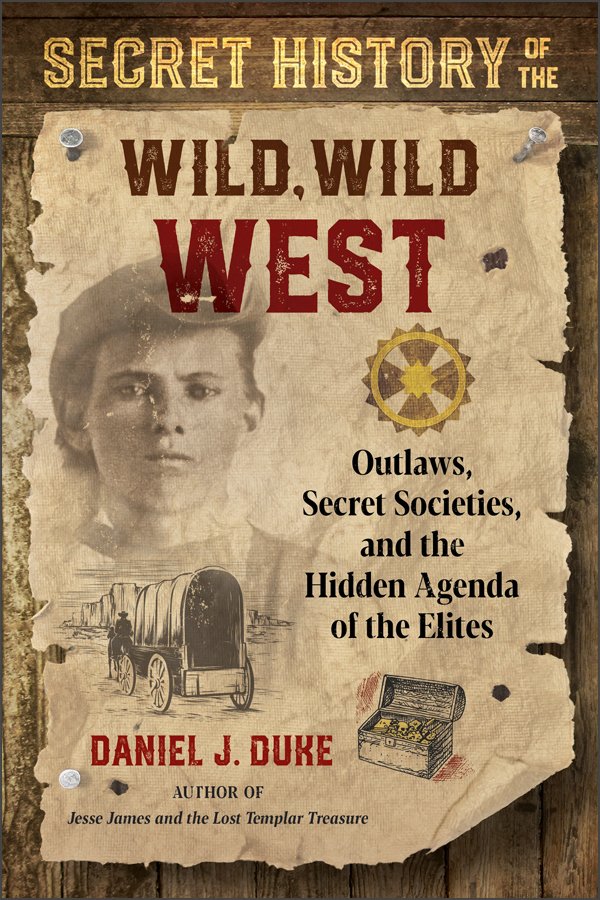
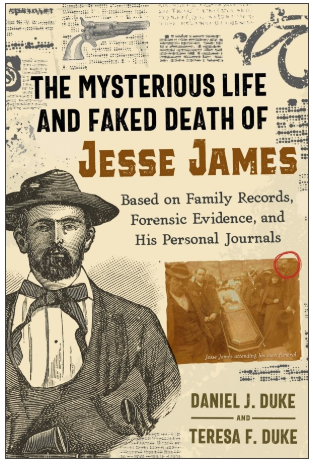
 Official website of author Daniel J. Duke