
Title: Unraveling the Mystery of Victorio Peak: A Treasure Trove Shrouded in Legends
In the annals of treasure hunting, few tales capture the imagination quite like the saga of Victorio Peak. Tucked away in the Hembrillo Basin area of New Mexico, this chapter of history revolves around a man named Milton Ernest “Doc” Noss, who stumbled upon an extraordinary discovery that would spark decades of intrigue and speculation.
The year was 1937, and Doc Noss was on a routine hunting expedition when he made a life-altering find. Seated on a small rock outcropping, he noticed air emanating from beneath the rock. Investigating further, he uncovered the entrance to a cave that reportedly held treasures surpassing $3 billion in value. What followed was a series of events that would confound researchers and captivate the public for years to come.
Doc’s exploration of the cave revealed a trove of riches – chests brimming with coins and jewels, saddlebags, over 16,000 gold bars each weighing more than 40 pounds, Wells Fargo boxes, and letters dating back to 1880. The legend goes on to describe Doc and his wife, Ova “Babe” Noss, spending countless hours exploring the tunnels within the mountain, living in a tent at its base.
However, the tale takes a darker turn in 1939 when Doc, in an attempt to expand the cavern’s narrow passageways, used dynamite and inadvertently sealed the only known entrance. As the story goes, he buried much of the gold in various desert locations, reaching out to black-market dealers due to gold ownership restrictions at the time. Doc’s life spiraled into paranoia, strained relationships, and ultimately tragedy when he was shot in 1949 by one of his business partners.
Ova Noss, undeterred by her husband’s fate, tirelessly sought to recover the treasure. Her efforts faced a significant obstacle in 1955 when the government expanded the boundaries of the White Sands Missile Range, hindering access to Victorio Peak. In 1958, a group of airmen claimed to have discovered gold bars within the caverns, sparking further controversy and speculation.
As the story unfolds, doubts emerge about the origin of the treasure. Chief Victorio, an Apache chief, is traditionally linked to the cache, supposedly amassed through robbing and pillaging. Yet, the sheer magnitude of the hoard, weighing more than 300 tons, raises skepticism. Historical context is crucial, as the Spanish, in over 150 years, shipped far less gold from America to Europe.
The intriguing letter supposedly reburied by Doc Noss in a Wells Fargo chest, dated 1797 with a translation from Pope Pius III, adds complexity to the narrative. The translation hints at the elusive “Seven Cities of Gold,” connecting the legend to Cibola, a narrative that began with the Narváez Expedition in 1527. However, the timing of events raises questions, as Pope Pius III died in 1503, predating the origins of the Cibola legend.
Further research into the legend of Cibola uncovers alternative origins, rooted in the eighth-century Moorish invasion of Porto, Spain. Seven bishops fleeing westward to an island called Antilla are believed to have inspired the legend. The bishops’ communication may have reached Pope Pius III, shedding light on the mysterious connection between the treasure and historical figures.
While the identity of the treasure’s true owner remains elusive, the allure of Victorio Peak endures. Even in the Watergate hearings of 1973, the treasure made an appearance, indicating the enduring fascination and the lingering possibility of hidden riches. Former New Mexico Attorney General David Norvell encapsulated the sentiment best: “There’s too much evidence to discount completely the possibility that there’s something still in there.”
As the enigma of Victorio Peak continues to beckon treasure hunters and historians alike, it remains an uncharted chapter in the rich tapestry of American folklore and unsolved mysteries. The search for answers persists, and the tale of Victorio Peak stands as a testament to the enduring allure of hidden treasures and the quest for the unknown.
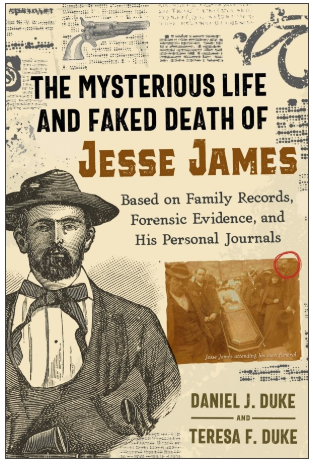
You can read much more about Victorio Peak and it’s connections to so much more in ‘Jesse James and the Lost Templar Treasure’, available anywhere books are sold.




 Official website of author Daniel J. Duke